


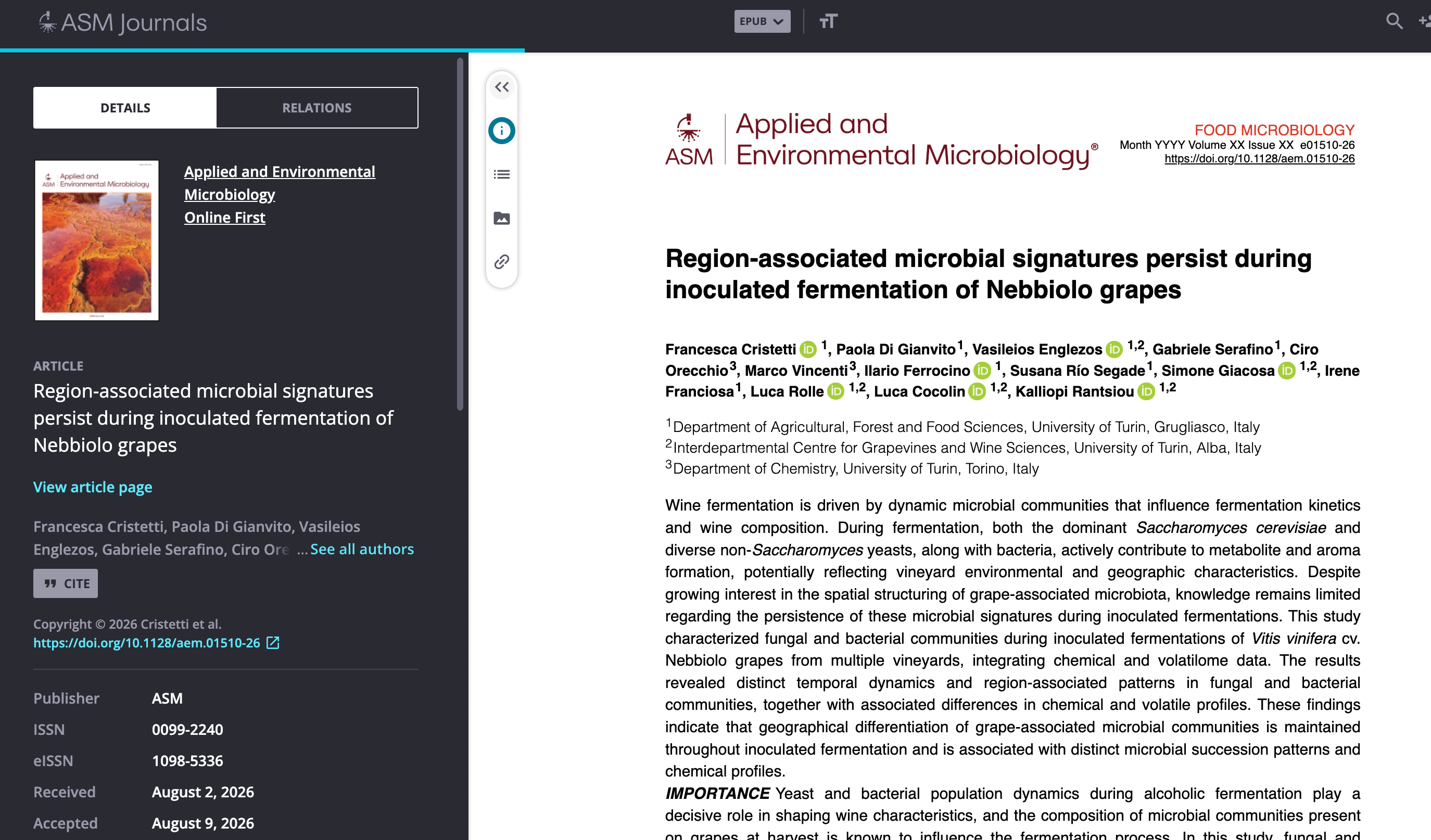
In a paper published yesterday by a group from the University of Turin, there are some surprising results about the ability of vineyard yeasts to out compete inoculated strains.
Wine is made by microbes. And grapes arrive in the winery covered in them, both yeasts (and other fungi) and bacteria. The goal of winemaking is to get good microbes to do the ferment and keep the bad ones at bay. So safety first winemaking is to add sulfites at grape reception at levels that knock back bacteria but not yeasts, and then inoculate with a cultured yeast. But some winemakers prefer to do a ‘wild’ or ‘native’ or ‘indigenous’ yeast ferment, in which case the wild yeast species do the job. And after fermentation, there’s also a malolactic transformation carried out by bacteria: this is desirable in almost all red wine ferments, but is a style choice in whites.
Conventional wisdom is that when must is inoculated with cultured yeasts, they dominate the fermentation, and override any impact from the yeasts that come in from the vineyard.
And where cultured yeasts are being used in a winery, the understanding is that these tend to carry out any ‘wild’ ferments that are attempted in this winery. The idea is that there would be so many yeasts in the air, they’d effectively inoculate the fermentations taking place in that winery, even if no cultured yeasts were added. This idea is sometimes extended further: that once cultured yeasts have been used in a winery, they persist across vintages because even thorough cleaning won’t get rid of all of them, and they’ll hang around at levels enough to inoculate subsequent vintages.
That’s why this new paper is quite surprising.
Cristetti F, Di Gianvito P, Englezos V, Serafino G, Orecchio C, Vincenti M, Ferrocino I, Río Segade S, Giacosa S, Franciosa I, Rolle L, Cocolin L, Rantsiou K 2026 Region-associated microbial signatures persist during inoculated fermentation of Nebbiolo grapes. Appl Environ Microbiol https://doi.org/10.1128/aem.01510-26
The researchers took 25 kg of grapes from 38 different Nebbiolo vineyards, from three distinct subregions in Valtellina. Then they looked at the fermentations, describing the fungal and bacterial populations (they sampled DNA) and looking at how they changed over time, from the very beginning of fermentation to when it completed.
The goal of this study was to see whether geographical origin is associated with differences in initial microbial diversity and community composition, and then they looked at how this changed throughout an inoculated fermentation, finally assessing the effect on the final wine. The big surprise was that inoculation with cultured strains doesn’t eliminate all the competition.
“In this study, fungal and bacterial community patterns associated with vineyard geography remained detectable throughout standardized inoculated fermentations, despite the dominance of a commercial starter culture. These persistent microbial signatures were associated with differences in microbial succession, chemical composition, and wine volatilome, supporting the concept that regional microbial imprints can remain detectable under commercial winemaking conditions.”
This is a study that strongly supports the notion of microbial terroir.
‘Regional identity in wine is biologically encoded and microbes from different vineyards behave differently and influence wine chemistry and aroma,’ says Dr Kalliopi Rantsiou, the lead author of the study. ‘Because microbial communities are shaped by geography, climate and viticultural practices, these factors indirectly influence fermentation outcomes and the regional typicity of wines. Furthermore, commercial inoculation does not entirely erase microbial signatures associated with the origin of the grapes.”
The significance here is that microbial terroir persists even when inoculation is practised by winemakers. Regional microbial differences were clear from the start and these differences did not disappear after inoculation. Microbial differences were linked to chemical and aroma differences. It’s really interesting that vineyard microbes can leave a lasting imprint on fermentation and wine aroma, even under controlled, inoculated conditions.
‘The outcomes support the concept that microbial terroir is robust. Even when winemakers use commercial yeast inoculation—a widespread practice—the vineyard’s native microbial community still shapes fermentation trajectories and contributes to wine identity,’ concludes Rantsiou.
The missing piece here is how consistent the microbial signatures are across vintages. But this is a really interesting study.
Hi Jamie, nice article, thanks for sharing.
Even though inoculation does not erase the effects, does the research give an indication to what degree the effects of microbial terroir on the resulting wine are diminished?
I can verify this. We made wine for a few years with our own starter (pied de cuvée ) in a facility that generally used only commercial yeasts. Our ferments were much slower and were organoleptically distinctive. They had much more mouthfeel and more complex aromas.